

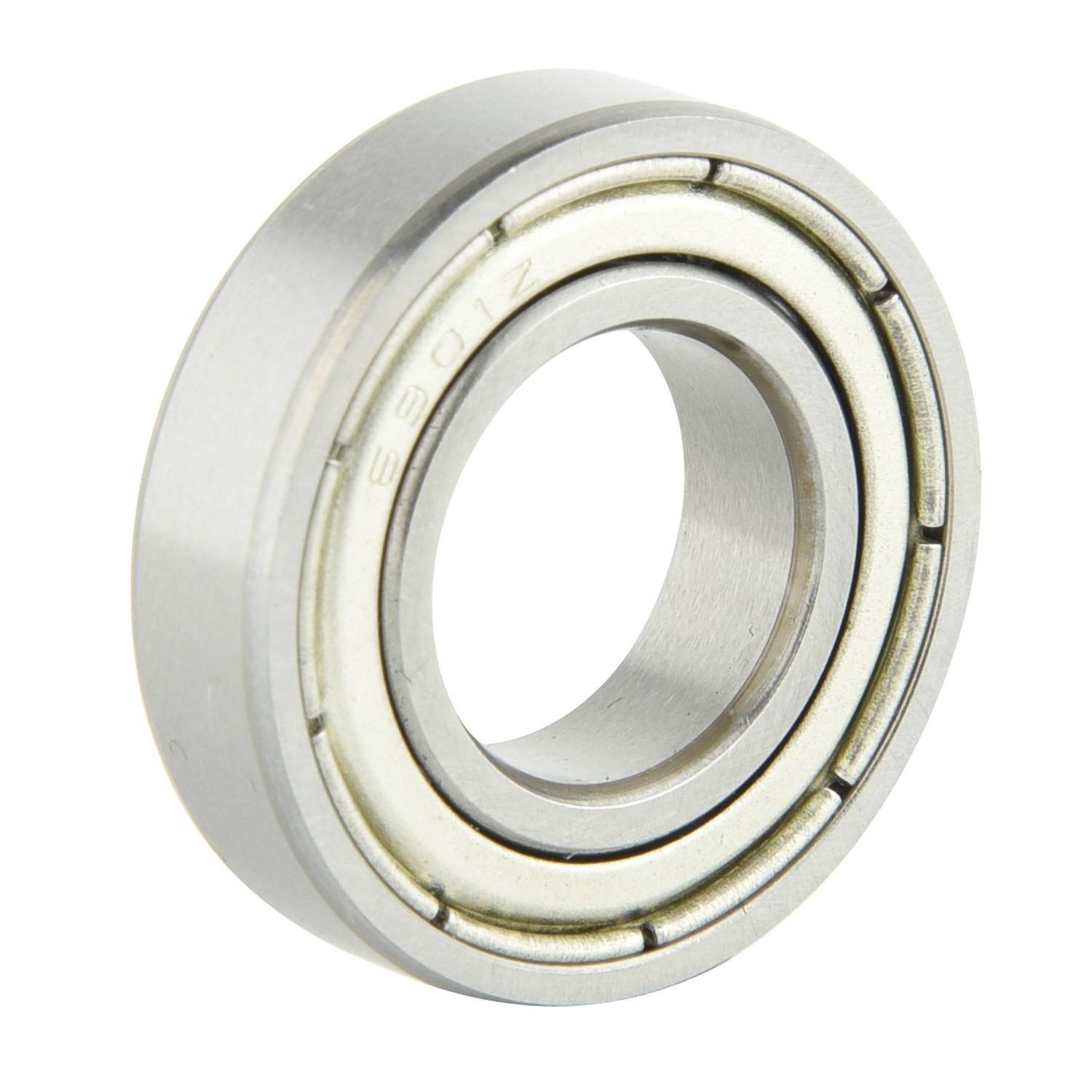


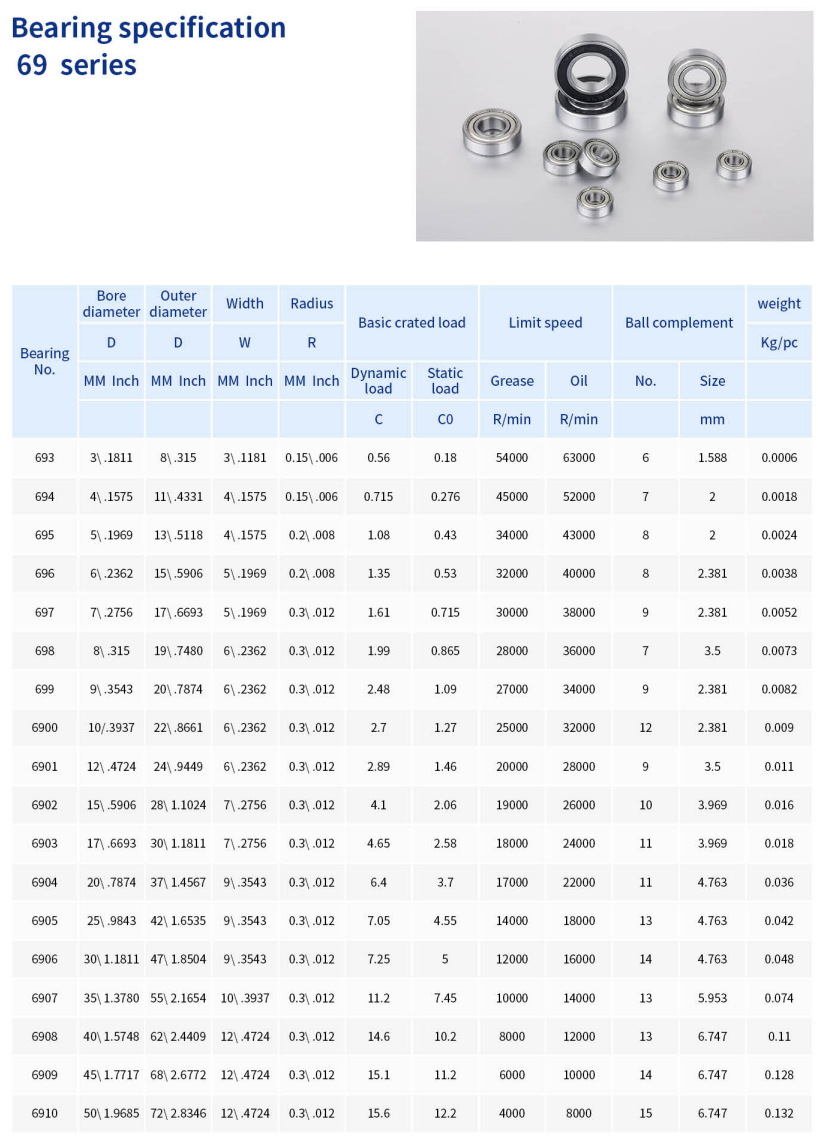
6900 Series Bearing
-Ratio of inner diameter to outer diameter: Compared with standard series with the same inner diameter (such as 62 and 63 series), the outer diameter is larger, and some models have increased width, forming a “wide body” structure and significantly improving rigidity.
-Thin walled design: Some 69 series (such as 6900, 6905) adopt ultra-thin wall thickness (similar to 688 series), suitable for scenarios with extremely limited axial space (such as micro machinery or precision instruments).
- Precise and durable, running like new
- Silent and efficient, powerful and surging
- Dealing with harsh environments with ease
- Energy conservation and consumption reduction, green future
- Global trust, quality benchmark
1. Size design
-Ratio of inner diameter to outer diameter: Compared with standard series with the same inner diameter (such as 62 and 63 series), the outer diameter is larger, and some models have increased width, forming a “wide body” structure and significantly improving rigidity.
-Thin walled design: Some 69 series (such as 6900, 6905) adopt ultra-thin wall thickness (similar to 688 series), suitable for scenarios with extremely limited axial space (such as micro machinery or precision instruments).
-Deep groove raceway: Designed with deep grooves on both the inner and outer rings, it can withstand radial loads and bidirectional axial loads simultaneously, but its axial load-bearing capacity is lower than that of angular contact bearings.
2. Performance characteristics
-Ultra high radial bearing capacity:
-Due to the increase in outer diameter and optimization of the raceway, the radial load capacity is close to or exceeds that of the 64 series, making it suitable for medium to heavy-duty working conditions such as industrial robot joints and heavy-duty transmission shafts.
-The axial load capacity is about 15% -25% of the radial load, and pure axial overload should be avoided.
-Speed adaptability:
-Due to the increase in size, the maximum speed is lower than that of the 62/63 series, but high-speed performance can be improved through lightweight retainers (such as nylon or composite materials) and high-quality lubricants.
-Friction and Temperature Rise:
-The contact area is relatively large and the friction coefficient is slightly high. Attention should be paid to heat dissipation design. It is recommended to use high-temperature resistant lubricating grease or ceramic ball bearings for high-temperature working conditions.
3. Application Fields**
-Heavy industry equipment: stamping machine spindle, mining machinery transmission shaft, heavy-duty conveyor belt drum.
-* * Precision Machinery * *: Optical instrument turntable, semiconductor manufacturing equipment (ultra-thin model required).
-New energy vehicles: Motor spindle, reducer support bearings (requiring high rigidity and high temperature resistance).
-* * Aerospace * *: Auxiliary transmission system, servo (requiring lightweight and high reliability).


Reviews
There are no reviews yet.